

Thrown & Altered, Porcelain, Gas Fired Neutral, Cone 10, 3.75"x4"x5", 2017

, , Media: Porcelain, Firing Process: Electric, Mid-range, Oxidation, Surface: Glazed

2023, 12"x10"x10",Firing Process: Electric, High-fire, Mid-range, Oxidation, Surface: Glazed, Pattern
Porcelain, Cone 6,

2023, 11"x12"x12", Media: Porcelain, Firing Process: Electric, High-fire, Mid-range, Oxidation, Surface: Glazed, Pattern
Porcelain Cone 6

2022, 3.75"x6.5"x6.5", Media: Porcelain, Firing Process: Electric, Mid-range, Oxidation, Surface: Glazed, Pattern, Unglazed

2021, 5.25"x9.5"x5, Media: Porcelain, Firing Process: Electric, Mid-range, Oxidation, Surface: Glazed, Oxide

2022, 7.75"x7.75"x1.5", Media: Porcelain, Firing Process: Electric, Mid-range, Oxidation, Surface: Glazed, Oxide, Pattern

2020, 6.25"x9"x7.75", Media: Porcelain, Firing Process: Electric, Mid-range, Oxidation, Surface: Glazed, Oxide, Pattern, Unglazed

2021, 7.5"x11"x4.5, Media: Porcelain, Firing Process: Electric, Mid-range, Oxidation, Surface: Glazed, Oxide, Pattern, Unglazed

2021, 8.5"x4"x3", Media: Non-clay, Porcelain, Firing Process: Electric, Mid-range, Oxidation, Surface: Glazed, Oxide, Pattern, Unglazed
Artist Statement
Bio
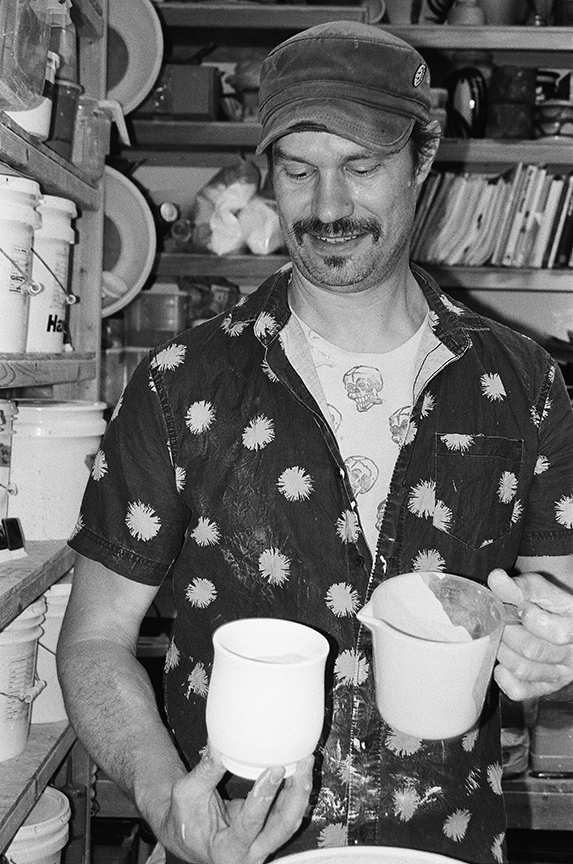
HP Bloomer IV was raised in central Texas. After finishing his Bachelors of Fine Arts in 2007, he was the recipient of the Texas Arts & Crafts Scholarship and University of North Texas Toulouse Graduate School Masters and Doctoral Fellowship. In graduate school his work began pulling from his experiences being raised by a family active in the arts. His father was a architect and painter and his mother was a potter and educator who ran the studio department of the local art center. This has been the building block for the rest of his current body of work. Upon completing his MFA in 2011 he moved to Colorado for a residency at the Carbondale Clay Center. During these two years, 2011-2013, he served as a studio technician at CCC while maintaining positions at Colorado Mountain College, the Aspen Art Museum, and the Harvey Meadows/Artstream Gallery. He has since been a Artist in Residence at the Arrowmont School of Arts and Crafts in Tennessee (2013-2014), Studio Manager at Santa Fe Clay (2014-2016) and is currently a Artist in Residence at Cobb Mountain Art and Ecology Project and Adjunct Faculty at Mendocino College in Ukiah. He has had work published in Lark’s 500 Teapots and Ceramics Monthly, Studio Potter and continues to exhibit his work around the country. He is currently represented by Eutectic Gallery in Seattle, Lillstreet Gallery in Chicago, Anderson Ranch Art Center in Snowmass Village Colorado, Santa Fe Clay in Santa Fe, The Lions Nest Gallery in Austin, and Arrowmont School of Arts and Crafts.