

2026, 9 x 15 x 10 cm, Media: Stoneware, Firing Process: Electric, High-fire, Surface: Glazed
Or 'Midas's Touch' takes its inspiration from the Phrygian king whose golden curse originated across the Aegean from Rhodes, in the mythological landscape of Anatolia. A lump of wedged earthenware holds a single bite: teeth meeting clay in the body's most intimate gesture. The impression is sealed in transparent glaze and 14ct gold lustre; the expelled fragment, equally gilded, lies beside it. Midas could not eat, could not embrace. When touch becomes a transaction, even appetite turns to currency.

2025, 20 x 36 x 35 cm, Media: Porcelain, Firing Process: Electric, High-fire, Surface: Glazed, Unglazed
Three islands formed on slip-casting porcelain both pooled and scrunched into existence float on plexiglass pillars at varying heights, crystalline cobalt glaze pooling where water would be, raw clay where land emerges. At one point the water levels intersect: territorial seas overlapping, sovereignty complicated. Islands do not exist alone; their edges are always negotiated.

2025, 10 x 32 x 35 cm, Media: Stoneware, Firing Process: Electric, High-fire, Surface: Glazed, Lustre
The title wants everything. It catalogues desire without hierarchy, stacking blessings until they buckle under their own weight. Health and wealth, virtue and longevity, and then the final demand: an easy death. But long life and easy death pull in opposite directions. The wish contains its own impossibility. Getting what you want and getting what you wish for are rarely the same thing. The fortune cookie exists to be broken. Its purpose is destruction: crack, extract, discard. These works refuse that economy. Two cookies, approximately twenty centimetres each, their familiar forms made unfamiliar. The proportions suggest memory but deliver presence, too generous, too insistent to be dismissed as a replica. What was designed for a second's consumption now demands sustained attention. The doubling compounds the greed encoded in the title: one fortune is never enough. A white crackle glaze fractures across each convex shell, fissures revealing warm stoneware beneath. The cracks read as text without language, an alphabet of heat and time that the eye pursues but cannot decode. A rim of 14-carat gold traces the outer edges, not decoration but threshold, marking where the edible becomes eternal. From each inner lip spill entrails of red thread, dense and weighted. What should be hidden, the cookie's interior, has been pulled outward and made visible. The fortune is no longer a slip of paper but a visceral excess, the object unable to contain what it carries. Clay petrifies the ephemeral. Gold sanctifies the disposable. Threads replace paper. The cookies cannot break. The fortunes cannot be read. The familiar gesture, crack, unfold, consume, has been rendered impossible. The work holds these tensions without resolving them, suspending biscuit, ritual, jest, and prophecy in sumptuous material form.

2025, 10 x 30 x 20 cm, Media: Stoneware, Firing Process: Electric, High-fire, Surface: Engobe / Slip / Underglaze, Glazed, Unglazed
Searching for the most elemental intra-action between person and clay. Divisible only by itself and one.

2025, 8 x 25 x 15 cm, Media: Earthenware / Terracotta, Firing Process: Mid-range, Surface: Glazed
The interior is clawed out, leaving a glossy landscape of finger marks. The raw, matte exterior creates a silent boundary for the chaos within.

2026, 2.5 x 15 x 25 cm, Media: Stoneware, Firing Process: Mid-range, Surface: Glazed, Oxide
Amber teething beads for toddlers, a necklace of teeth for the victor, glass beads used for exchange for people's lives in the slave trade: a record of humanity no longer present.

2026, 100 x 110 x 90cm, Media: Mixed Media, Firing Process: Unfired, Surface: Glazed
Delilah undid Samson through intimacy; Alexander cut what he could not solve. This knot refuses both, a continuous form that offers no beginning, no end, no point of severance. Broken fragments in Madonna blue cover its surface, devotion and seduction reassembled. Weight: Approx. 100kg

2025, Variable 15 x 10 x 15, Media: Earthenware / Terracotta, Firing Process: Mid-range, Surface: Glazed
Collaborative installation by Maciej Urbanek and Olivia Fero brings together monumental painting and intimate sculptural form in a contemplative, immersive environment. The work unfolds as a dialogue between scale and intimacy, surface and volume, permanence and fragility, evoking the image of a forest and its silent, desiccated fruit. Urbanek presents three large-scale abstract paintings on paper, each measuring approximately four metres by one and a half metres, installed side by side to form a triptych. Despite their abstract language, the paintings carry a sombre, almost elegiac presence. Executed predominantly in black, white and silvery pewter tones, their surfaces shimmer subtly as they catch the light, producing an unstable optical effect that shifts with the viewer’s movement. The imagery suggests bundles of dried twigs, burnt ruins, or stands of birch trees reduced to spectral forms. These works are the result of a process in which highly diluted acrylic paint is guided by water across the paper’s surface, allowing gravity, absorption and material resistance to shape the final image. The paper itself reacts physically, buckling and undulating, becoming a record of forces acting upon it rather than a neutral support. Placed before this painted “forest” are Olivia Fero’s three ceramic sculptures, each formed from a continuous strand of clay that twists, loops and reconnects with itself, creating knotted, self-contained forms. Roughly thirty by thirty centimetres in scale, the sculptures rest on white plinths, asserting a quiet but insistent presence against the vastness of the paintings behind them. Their surfaces are coated in a glossy white crackle glaze, over which jet-black paint is applied in a seemingly random, camouflage-like pattern. These objects read simultaneously as fruits, relics, or remnants—forms that appear sealed, complete, and inert. Together, the paintings and sculptures construct an environment that is austere, reflective and emotionally restrained. The forest is monochrome, mournful, and stripped of vitality; its fruit appears equally lifeless, frozen at a point between growth and decay. The installation resists narrative clarity, instead encouraging a slow, meditative engagement in which viewers oscillate between material observation and symbolic association.

2025, 15 x 10 x 15, Media: Earthenware / Terracotta, Firing Process: Mid-range, Surface: Glazed
This is one piece of the three Garden of Eden series works. Explanation is with the overview.

2025, 15 x 20 x 10, Media: Earthenware / Terracotta, Firing Process: Mid-range, Surface: Glazed
This is a detail of the first piece in my Garden of Eden series, from a installation with the painter Maciej Urbanek (www.urbanek.co.uk). Concept information in the overview.
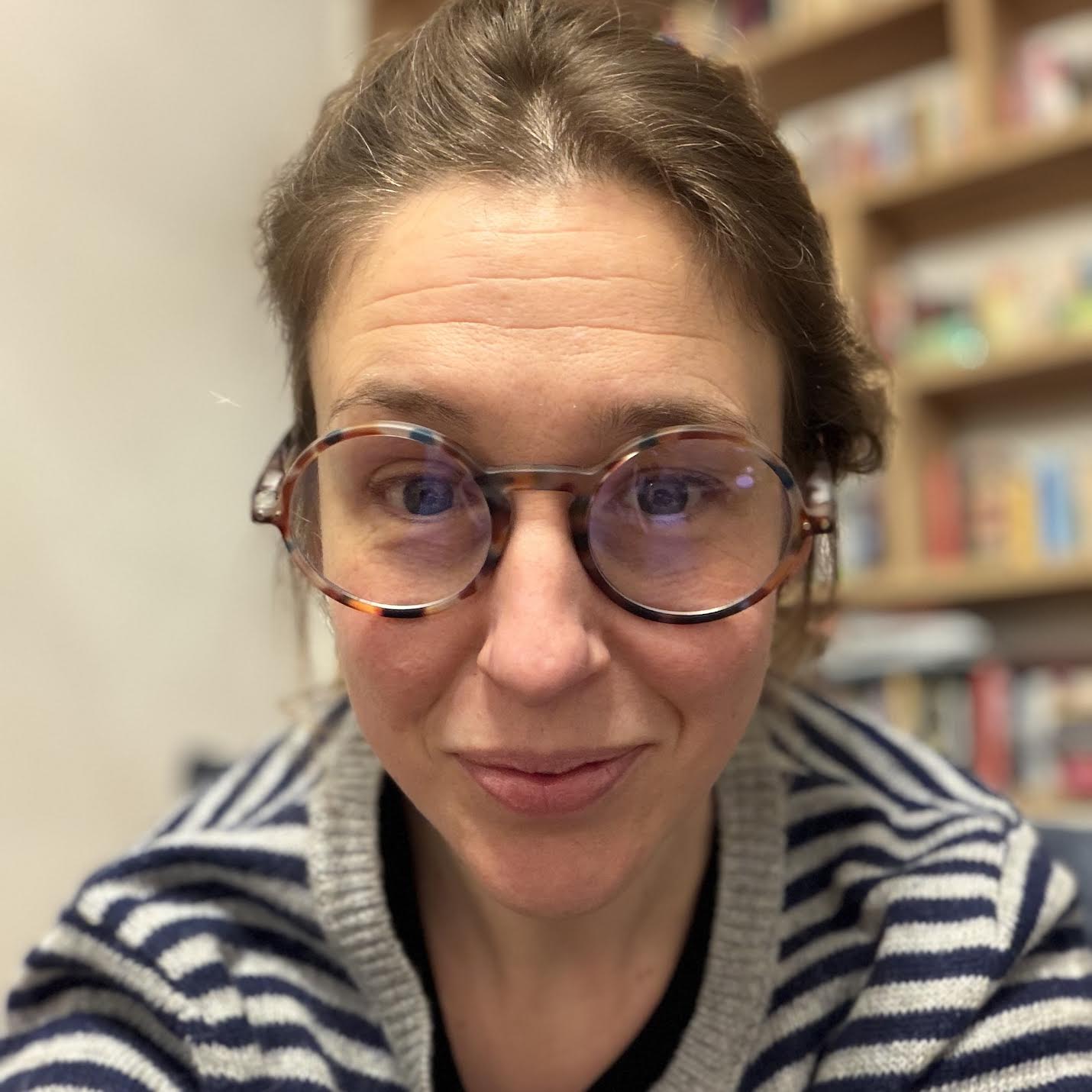
Artist Statement
Clay is the oldest human archive. My practice investigates what it records: the pressure of hands, the heat of kilns, the slow entanglement of human and ecological agencies across millennia.
I work with earthenware, porcelain, and stoneware to explore how meaning emerges through material encounter rather than conceptual imposition. Drawing on Karen Barad's theory of intra-action, I approach clay as witness rather than medium. A bite mark becomes forensic evidence gilded in gold. A crystal glaze fractures according to its own molecular logic. Making is always negotiation.
My research extends beyond the vessel/sculpture divide that preoccupies Western ceramic discourse. I am drawn to how clay carries geological deep time, and how this material persistence connects us to twelve thousand years of human ceramic knowledge. Working between Hungarian Zsolnay traditions and Chinese porcelain, between Pécs and Jingdezhen where I will begin a residency in July, I explore how different ceramic cultures offer parallel frameworks for understanding what clay holds.
Through making, writing, and curating, I investigate both clay's material agency and the semiotics of ceramic objects, the inherited meanings that cluster around familiar forms. My practice inverts these associations: a fortune cookie scaled up cannot break, the expected gesture rendered impossible; a bite mark gilded in gold transforms the intimate into the ornamental. When objects are divorced from their primary function, a different kind of attention emerges. Clay has been meaning for twelve thousand years. My work asks what we can still do with that inheritance.
Bio
Olivia Fero is a ceramicist-theorist whose practice combines making, writing, and curating to investigate clay as material witness. Her work explores how ceramic objects record human and ecological entanglement across deep time, challenging the hierarchies that separate vessel from sculpture, craft from concept. Fero holds a BA (First Class) in Fine Art and History of Art from Goldsmiths College, London, and is completing an MA in International Ceramic Design at the University of Pécs, Hungary. Her theoretical framework draws on Gilbert Ryle’s critique of dualism and Karen Barad’s concept of intra-action. Her ceramic practice spans intimate gestural works exploring the body’s trace through techniques including lustre, crystal glazes, and slip casting, to larger proposals investigating how objects behave when divorced from their primary function. She is a curator and writer for art and ceramics journals and recently organised the international exhibition How Do We Live? at Nádor Gallery, Pécs. She begins a residency in Jingdezhen, China, in July 2026.