

2025, 144" x 60" x 60", Media: Mixed Media, Stoneware, Firing Process: Electric, Surface: Engobe / Slip / Underglaze, Image transfer / Decals / Screenprint
This 12-foot tall mixed-media sculpture uses 3,840 stitched together ceramic watermelons to visually express the distinct contrast between the perception of Palestinians and the reality I’ve always known as a Palestinian-American. This work addresses stereotypes, propaganda, misinformation, and censorship surrounding the image of Palestine within pop culture, while extending Palestinian traditions. Screen printed and hand painted watermelons act as a barrier, creating a protected space for a sculpture of the Beit Dajan orange blossom tatreez (embroidery) pattern.

2025, 144" x 60" x 60", Media: Mixed Media, Stoneware, Firing Process: Electric, Surface: Engobe / Slip / Underglaze, Image transfer / Decals / Screenprint

2023, 20" x 9" x .25", Media: Stoneware, Firing Process: Electric, Surface: Engobe / Slip / Underglaze, Glazed, Image transfer / Decals / Screenprint
This piece illustrates the Palestinian-Puerto Rican-American world that I grew up in. Elements from each culture blur together, leaving it unclear which part belongs to which culture. I never thought about which culture any of these things came from, because they all came from mine. The tiles are held together by thread to speak to the way that mixed people pull together bits and pieces of their identities to form one new, cohesive whole.

2023, 40" x 40" x .25", Media: Stoneware, Firing Process: Electric, Surface: Non-ceramic, Pattern
The Weight We Carry is a keffiyeh consisting of 400 ceramic tiles stitched together. When worn, this keffiyeh goes beyond its original purpose; it becomes a piece of armor and a weighted blanket to ease the anxiety that I have previously experienced from putting my Palestinian heritage on display.

2026, 96” x 120”, Media: Stoneware, Firing Process: Electric, Surface: Engobe / Slip / Underglaze, Pattern
Olive branches carried us home integrates two symbols of Palestinian endurance and identity: the keffiyeh and the olive tree. The keffiyeh began as a utilitarian object, worn to protect one’s face from sun and dirt while working in the olive groves. Over time, it became a symbol of solidarity in the pursuit of Palestinian liberation. Whether wrapped around the head in the olive grove or worn to shield one’s identity at a protest, the keffiyeh has become a means of protection and shelter. In Olive branches carried us home, a seemingly charred keffiyeh rises from the ground, carried toward the sky by a flock of olive branch motifs that have transformed into birds. As they climb, they carry with them imagery from my grandmother’s stories of her life in Palestine. By transforming these stories into ceramic, I give them the power to endure. Olive trees symbolize Palestinian rootedness, endurance, and belonging to the land. Like ceramic, they are known for their ability to persist through time, weather, and fire. While Palestinians carry so much weight and darkness due to the trauma inflicted on our people, there is also endless beauty and joy in being Palestinian. The olive branches and charred keffiyeh carry both. Like the flock of olive branches that carry the keffiyeh toward the sky, we are carried by our memories, our stories, and by our solidarity with one another.

2023, 7" x 9" x 21", Media: Porcelain, Firing Process: Electric, Surface: Engobe / Slip / Underglaze, Image transfer / Decals / Screenprint
When I was a kid, I did everything in my power to hide that I was Palestinian, just wanting to blend in and be a “normal” kid. I blamed my frizzy hair and thick eyebrows as the visual giveaway that I was Arab. I envied other girls’ straight, thin hair and thought that if I could just look more like them, I would fit in. In Just Like Them, I reflect on that shame and reclaim my heritage by replacing my hair with a headdress made of stitched together Palestinian pottery, proudly displaying my Palestinian heritage for everyone to see.

2025, 11" x 11" x .25", Media: Stoneware, Firing Process: Electric, Surface: Engobe / Slip / Underglaze
This piece weaves together imagery and memories from my grandparent’s house in Puerto Rico with those of my current home in Florida. Beneath these concrete scenes are generic illustrations of orange trees, standing in for the memories of my family’s orange grove in Beit Dajan, Jaffa, Palestine, as most of them have been lost to time and displacement.

2025, 17” x 16” x .25", Media: Stoneware, Firing Process: Electric, Surface: Engobe / Slip / Underglaze
Relatively Normal draws from my memories of the blended world that I grew up in, where Puerto Rican, Palestinian, and Midwestern culture become one. Elements of each are woven into daily life. While this world felt whole and like it belonged to me within my home, in the outside world, I never felt like quite enough of any one of these cultures, carrying with me the sense of being a fragmented imposter.

2023, 48" x 50", Media: Colored porcelain, Firing Process: Electric, Surface: Pattern, Unglazed
After spending 21 hours over the course of a week tracing the patterns of my Grandma’s prayer mat in porcelain slip, my recreation shattered into countless pieces in the kiln. The careful act of piecing it back together has become a ritual, which I have repeated in six different locations. There will always be parts that are lost, and it is impossible to finish, but I will keep piecing it back together as a way of maintaining my culture through repetition and connection.

2023, 48" x 50", Media: Colored porcelain, Firing Process: Electric, Surface: Pattern, Unglazed
Artist Statement
Kefta seasoned with Goya, Umm Kulthum playing in the background as my mom speaks Spanish on the phone, calling my uncles “amo” and my aunts “titi,” my grandma on her prayer mat while my grandmi shouts “ay Dios mio!” I couldn’t necessarily identify which components belonged to which culture because they all came from mine.
My work is a glimpse into an intangible world that I have always known. Many of us who are mixed carry this world with us; each of ours is different, but they all run parallel to one another. As a Puerto Rican-Palestinian-Midwesterner, I have always lived in this world, at the intersection of three cultures. In my practice, I create and piece together ceramic multiples, fragments, and tiles with collaged surfaces that imitate and hold onto traditions, icons, architecture, and language from my family’s oral histories, to keep them alive.
My practice highlights and questions how we hold onto traditions and stories and how we create our own, new iterations through time, as cultures naturally shift and change in diaspora. These cultures are carried on through repetition, daily gestures, and acts of care, which is reflected in my practice through repetitive, tedious acts and careful craft. My work questions what is lost and what is gained in the mixing of cultures. Parts of it fragment and fade through time, memory, and diaspora, but the parts that remain adapt and are enriched by other fragments that never seemed like they would fit. These seemingly mismatched parts come together unexpectedly to form a new, unconventional whole.
Bio
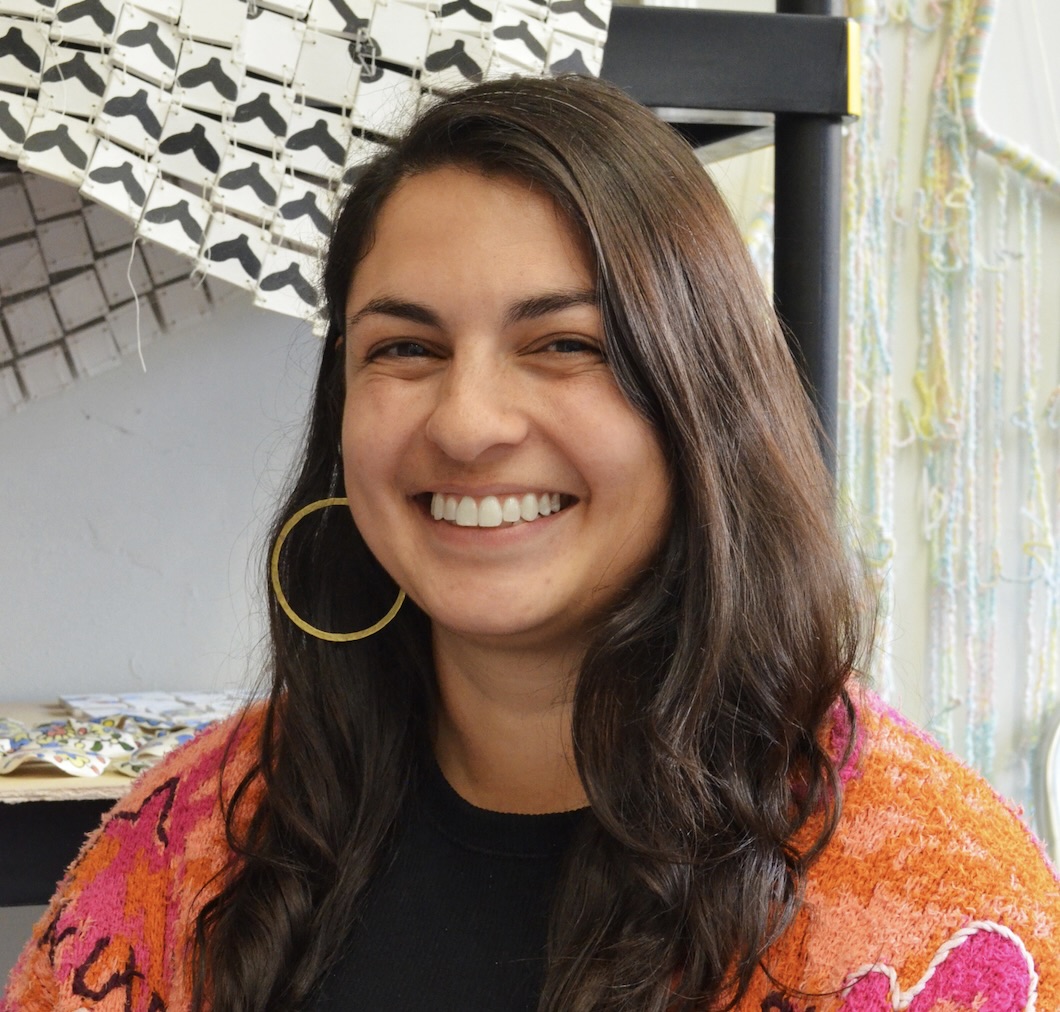
Karina Yanes is a Florida-based ceramic artist whose work is rooted in her Ohio upbringing as a Puerto Rican-Palestinian-Midwesterner. She received her BA in Studio Art from Denison University and her MFA from the University of Florida. Karina has been an artist-in-residence at ACRE, Craigardan, the Open Studio Residency at Haystack School of Craft, and the CIRCA Graduate Exchange. She was a 2024 recipient of the NCECA Graduate Fellowship and was selected for Fresh Squeezed 8: Emerging Artists in Florida at the Morean Arts Center. She recently had a solo exhibition at the Morean Center for Clay in St. Petersburg, FL, and has upcoming solo exhibitions at the Jane Hartsook Gallery in New York and the Sarasota Arts Center in Sarasota, FL. Karina is currently an adjunct professor at the University of Florida.