

2021, 12 x 16 x 9 inches
Ceramic with underglaze

2025, 62 x 18 x 12 inches,Firing Process: Electric, High-fire, Surface: Engobe / Slip / Underglaze, Oxide, Pattern
Ceramic with underglaze and oxide on wood pedestal. My work has long explored the concept of “support.” The 2025 series, Holding On, focuses on the pedestal—the fundamental support of sculpture itself. I integrate supportive elements of the body—hands, feet, arms and legs—with architectural components that serve similar functions, such as table legs, brackets, and columns. The sculptures themselves are ceramic amalgamations of body parts. By working with malleable clay, I could create spiraling, intertwined compositions that seem to “hold” themselves together. To disrupt the literalness of the bodily forms, I transformed their surfaces with underglaze patterns, oxides, and metallic glazes. The pairings of sculpture and pedestal shift between balance and precariousness. My challenge was to create the pedestals before or during the creation of the sculptures, combining found and fabricated objects, including tables, lecterns, and hewn wood blocks.

2025, 73 x 15 x 18 inches, Media: Mixed Media, Firing Process: Electric, High-fire, Oxidation, Surface: Image transfer / Decals / Screenprint
Ceramic with underglaze on wood pedestal. My work has long explored the concept of “support.” The 2025 series, Holding On, focuses on the pedestal—the fundamental support of sculpture itself. I integrate supportive elements of the body—hands, feet, arms and legs—with architectural components that serve similar functions, such as table legs, brackets, and columns. The sculptures themselves are ceramic amalgamations of body parts. By working with malleable clay, I could create spiraling, intertwined compositions that seem to “hold” themselves together. To disrupt the literalness of the bodily forms, I transformed their surfaces with underglaze patterns, oxides, and metallic glazes. The pairings of sculpture and pedestal shift between balance and precariousness. My challenge was to create the pedestals before or during the creation of the sculptures, combining found and fabricated objects, including tables, lecterns, and hewn wood blocks.

2025, 55 x 34 x 24 inches , Media: Mixed Media, Firing Process: Electric, High-fire, Oxidation, Surface: Image transfer / Decals / Screenprint
Ceramic with underglaze and oxide on wood pedestal. My work has long explored the concept of “support.” The 2025 series, Holding On, focuses on the pedestal—the fundamental support of sculpture itself. I integrate supportive elements of the body—hands, feet, arms and legs—with architectural components that serve similar functions, such as table legs, brackets, and columns. The sculptures themselves are ceramic amalgamations of body parts. By working with malleable clay, I could create spiraling, intertwined compositions that seem to “hold” themselves together. To disrupt the literalness of the bodily forms, I transformed their surfaces with underglaze patterns, oxides, and metallic glazes. The pairings of sculpture and pedestal shift between balance and precariousness. My challenge was to create the pedestals before or during the creation of the sculptures, combining found and fabricated objects, including tables, lecterns, and hewn wood blocks.

2025, 42 x 14 x 14 inches , Media: Mixed Media, Firing Process: Electric, High-fire, Surface: Image transfer / Decals / Screenprint, Oxide, Pattern
Ceramic with underglaze with cast iron base. My work has long explored the concept of “support.” The 2025 series, Holding On, focuses on the pedestal—the fundamental support of sculpture itself. I integrate supportive elements of the body—hands, feet, arms and legs—with architectural components that serve similar functions, such as table legs, brackets, and columns. The sculptures themselves are ceramic amalgamations of body parts. By working with malleable clay, I could create spiraling, intertwined compositions that seem to “hold” themselves together. To disrupt the literalness of the bodily forms, I transformed their surfaces with underglaze patterns, oxides, and metallic glazes. The pairings of sculpture and pedestal shift between balance and precariousness. My challenge was to create the pedestals before or during the creation of the sculptures, combining found and fabricated objects, including tables, lecterns, and hewn wood blocks.

2025, 71 x 16 x 16 inches , Media: Mixed Media, Firing Process: Electric, High-fire, Surface: Glazed
Ceramic with glaze on wood column. My work has long explored the concept of “support.” The 2025 series, Holding On, focuses on the pedestal—the fundamental support of sculpture itself. I integrate supportive elements of the body—hands, feet, arms and legs—with architectural components that serve similar functions, such as table legs, brackets, and columns. The sculptures themselves are ceramic amalgamations of body parts. By working with malleable clay, I could create spiraling, intertwined compositions that seem to “hold” themselves together. To disrupt the literalness of the bodily forms, I transformed their surfaces with underglaze patterns, oxides, and metallic glazes. The pairings of sculpture and pedestal shift between balance and precariousness. My challenge was to create the pedestals before or during the creation of the sculptures, combining found and fabricated objects, including tables, lecterns, and hewn wood blocks.

2025, 48 x 26 x 26 inches,Firing Process: Electric, High-fire, Surface: Oxide
Ceramic with oxide and underglaze on painted cast iron pedestal. My work has long explored the concept of “support.” The 2025 series, Holding On, focuses on the pedestal—the fundamental support of sculpture itself. I integrate supportive elements of the body—hands, feet, arms and legs—with architectural components that serve similar functions, such as table legs, brackets, and columns. The sculptures themselves are ceramic amalgamations of body parts. By working with malleable clay, I could create spiraling, intertwined compositions that seem to “hold” themselves together. To disrupt the literalness of the bodily forms, I transformed their surfaces with underglaze patterns, oxides, and metallic glazes. The pairings of sculpture and pedestal shift between balance and precariousness. My challenge was to create the pedestals before or during the creation of the sculptures, combining found and fabricated objects, including tables, lecterns, and hewn wood blocks.

2025, 49 x 18 x 12 inches ,Firing Process: Electric, High-fire, Surface: Engobe / Slip / Underglaze, Image transfer / Decals / Screenprint, Pattern
Ceramic with underglaze on altered wood table. My work has long explored the concept of “support.” The 2025 series, Holding On, focuses on the pedestal—the fundamental support of sculpture itself. I integrate supportive elements of the body—hands, feet, arms and legs—with architectural components that serve similar functions, such as table legs, brackets, and columns. The sculptures themselves are ceramic amalgamations of body parts. By working with malleable clay, I could create spiraling, intertwined compositions that seem to “hold” themselves together. To disrupt the literalness of the bodily forms, I transformed their surfaces with underglaze patterns, oxides, and metallic glazes. The pairings of sculpture and pedestal shift between balance and precariousness. My challenge was to create the pedestals before or during the creation of the sculptures, combining found and fabricated objects, including tables, lecterns, and hewn wood blocks.

2025, 18 x 12 x 3 inches ,Firing Process: Electric, High-fire, Surface: Engobe / Slip / Underglaze, Image transfer / Decals / Screenprint, Oxide, Pattern
Ceramic with underglaze, wall-hanging.

2025, 13 x 13 x 6 inches,Firing Process: Electric, High-fire, Surface: Engobe / Slip / Underglaze, Oxide
Ceramic with underglazes and oxide, wall-hanging.
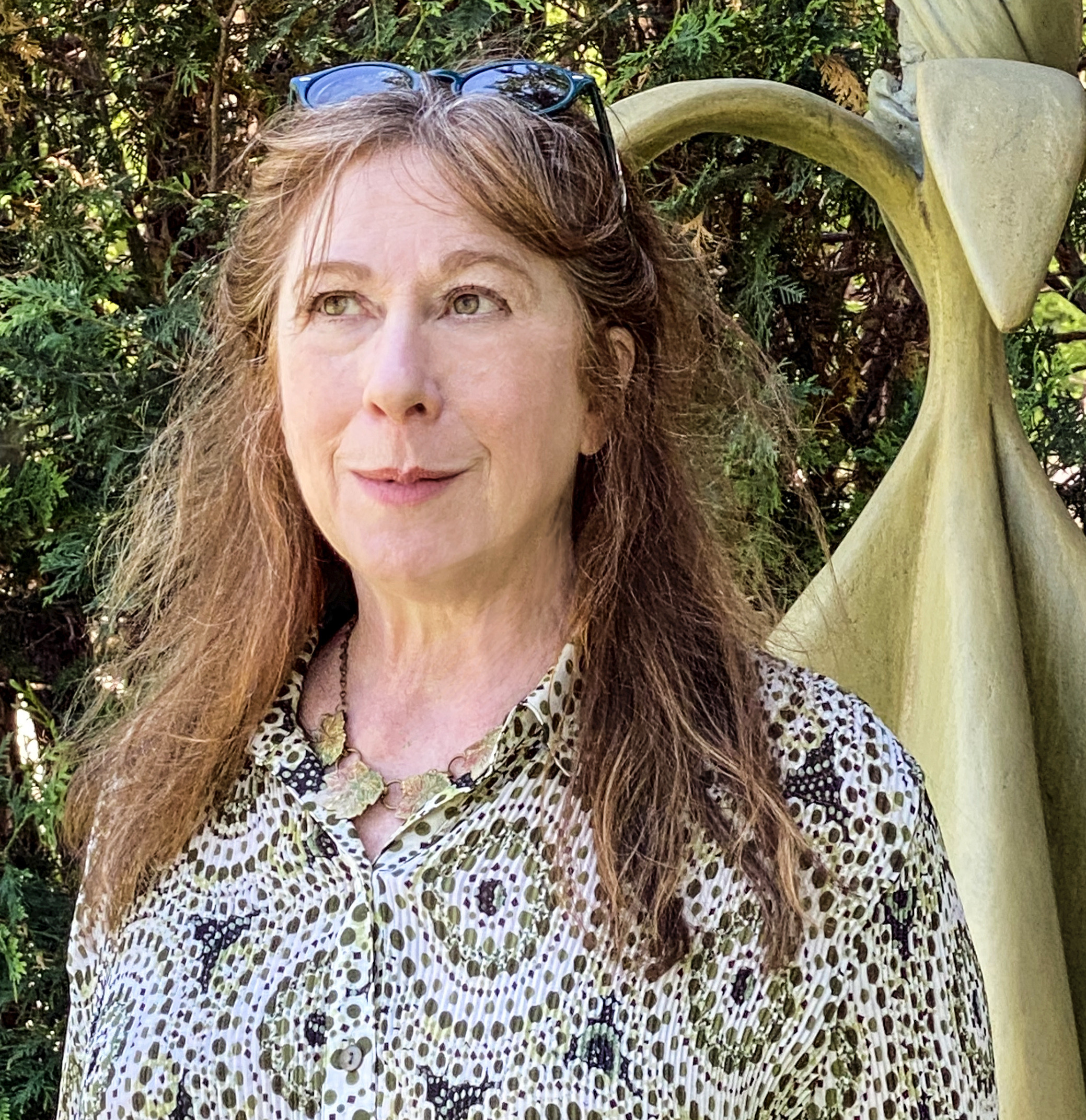
Artist Statement
Bio
Nature and the body are Leslie Fry’s subject, studio and material. She creates in a lush Vermont garden where her sculptures of guardian sphinxes and flying bird-women live amidst lilacs, songbirds, raspberries, and mint. Working with centuries-old sculpting processes, she models hybrid bodies out of clay and wax, then casts in bronze or concrete. Rooted in ancient world mythologies, Fry’s figures morph with animal, architecture, and plant life. Bronze bird-women wear sneakers and boots; a ceramic daisy becomes an eye; an Ionic column and Empire-style gown merge fluidly into solid concrete. Her drawings, ephemeral installations with plants, and permanent pub
Leslie Fry is a U.S./Canada dual citizen whose childhood took place within Montreal’s historic architecture and a Vermont mountain village. Among numerous honors and fellowships are Yaddo, Pollock-Krasner, Kohler Arts/Industry, and the Vermont Governor’s Award for Excellence. Permanent public sculptures include the beloved Colossal Acorn Head at Tufts University. Fry’s drawings and sculptures have been exhibited and collected internationally; venues ranging from a French chateau to a Florida nature trail to a South Korean sculpture park.